
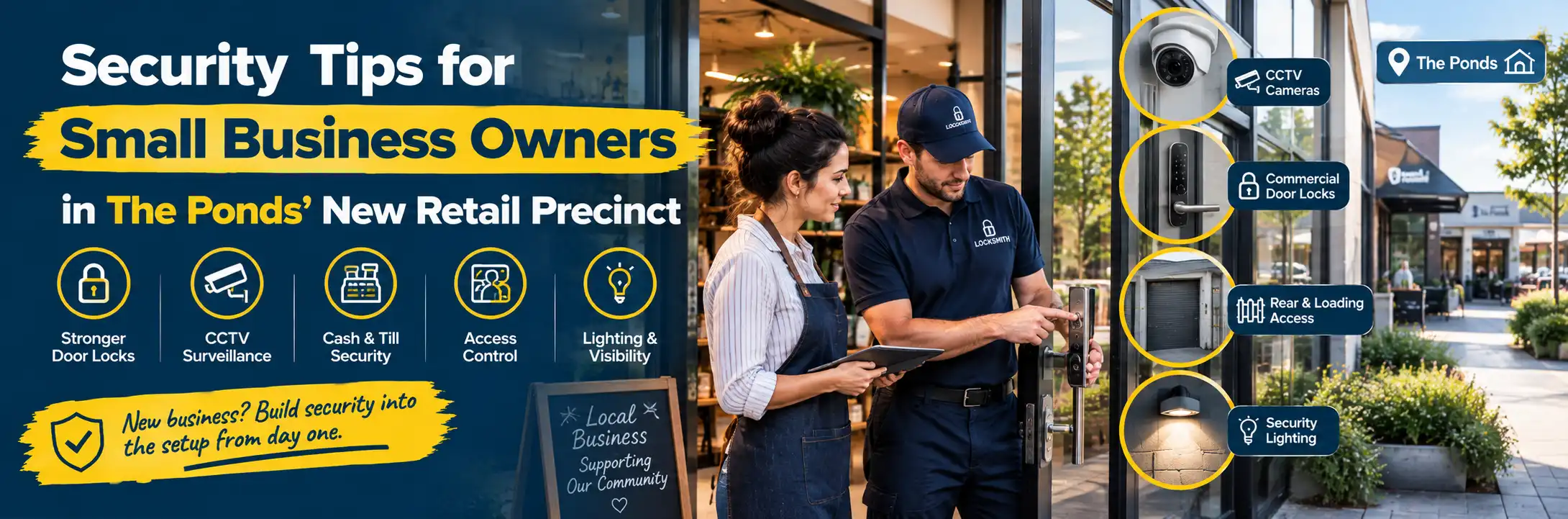
Opening a business in The Ponds’ new retail precinct comes with a genuine head start — a growing population, new foot traffic, and a community still forming its habits around where to shop and eat. It also comes with a security picture that’s still being written, which means the basics matter more than usual.
Getting the fundamentals right early is far easier than fixing gaps once a routine has already settled in.
What Security Actually Means for a New Precinct Business
Security tips for small business owners aren’t about one big investment — they’re about consistent daily habits, hardware that actually matches your risk, and knowing your weak points before anyone else does.
A precinct this new gives you a genuine advantage most established strips don’t have — the chance to build good security habits from day one, rather than retrofitting them after something’s already gone wrong.
Why a New Retail Precinct Has Its Own Risks
Understanding what makes a brand new precinct different helps explain where to focus first.
Still-Developing Foot Traffic Patterns
A precinct that’s still filling up with tenants and customers doesn’t yet have the predictable rhythm of an established shopping strip. Quieter periods during the day, especially while neighbouring shops are still being fitted out, can leave individual businesses more exposed than they will be once the precinct is fully tenanted.
Shared Loading Docks and Common Areas
Many new retail developments, including precincts like The Ponds’, are built around shared loading docks, common walkways, and rear service corridors used by multiple tenants. These shared spaces are convenient for deliveries, but they’re also an access point that’s only as secure as the least careful business using it.
Shopfront Security Tips for New Tenancies
Your shopfront is the first thing customers and passers-by see, and it’s worth getting right from your very first day of trading.
Don’t Assume Builder-Standard Is Enough
New tenancy fit-outs often come with basic, builder-grade door and window hardware, chosen to meet minimum requirements rather than reflect your specific business’s risk. One of the simplest shopfront security tips available is treating this hardware as a starting point, not the finished job.
Visible Deterrents Worth Installing Early
Cameras, clear signage, and well-lit entries all reduce risk simply by making a new business look established and watched over, rather than an easy, unguarded target during its early, quieter weeks of trading.
Securing Cash and Daily Takings
Cash handling is often where a new small business has its biggest day-to-day exposure, especially before a full routine has settled in.
Till and Cash Drawer Lock Security
A till and cash drawer lock security habit should be built into your very first week of trading, not added later once a routine already exists. Drawers left unlocked overnight, even inside a locked shopfront, are an easy and entirely avoidable risk.
Safe Placement in a New Fitout
When planning your fitout, choose a safe location that’s never visible from the street or an obvious first stop for anyone who gets past the front door. It’s far easier to plan this properly during the initial fitout than to retrofit it later.
“A new business deserves security habits built in from day one, not bolted on after the first problem.”
Access Control for New Precinct Tenants
Even a small team benefits from thinking about access control early, while everything is still being set up.
Master Key Systems for Small Teams
A simple master key system for office or retail use makes managing access far easier than duplicating full sets of keys for every new hire, which matters especially in the early months when hiring is still finding its rhythm.
Commercial Door Lock Installation Basics
Commercial door lock installation for a new tenancy should prioritise hardware matched to your actual foot traffic and stock value, rather than whatever came standard with the fit-out. Rear and loading dock entries in particular deserve stronger hardware than a typical front-of-house door.
Building a New Retail Precinct Security Checklist
A simple, practical checklist makes it easy to know exactly where your business stands from opening day.
- Upgrade builder-standard locks on both front and rear entries
- Set up a proper till and cash drawer locking routine from day one
- Plan safe placement before your fitout is finalised
- Install visible cameras and adequate lighting around your shopfront
- Agree on basic shared-space standards with neighbouring tenants
Working With Neighbouring Tenants Early
Because a new precinct is still filling up, there’s a real opportunity to set shared standards with neighbouring businesses before habits become fixed. If a lock or access issue ever comes up outside trading hours, having a commercial locksmith The Ponds businesses already trust on call saves a lot of stress.
Training Staff From Their First Shift
Cover the closing checklist, cash handling routine, and who to contact if something feels off in every new starter’s first shift, not as an afterthought.
Reviewing Your Setup as the Precinct Fills Up
As more tenants move in and foot traffic patterns become more established, it’s worth revisiting your original security setup to see whether it still fits.
Learning From Other Tenants in the Precinct
Other business owners who’ve already opened, even in a different industry, are often a valuable source of practical, local knowledge worth tapping into early.
Planning for Future Growth
Choosing scalable access control now, such as a master key system that can accommodate new team members easily, saves having to rethink your entire security setup every time the business expands.
Conclusion
Security for a new business in The Ponds’ retail precinct doesn’t need to be complicated — it needs to be built in from the very start, rather than added on once something’s already gone wrong.
Get the shopfront, cash handling, and access control basics right early, and those good habits carry your business through as the precinct, and your customer base, continues to grow.