
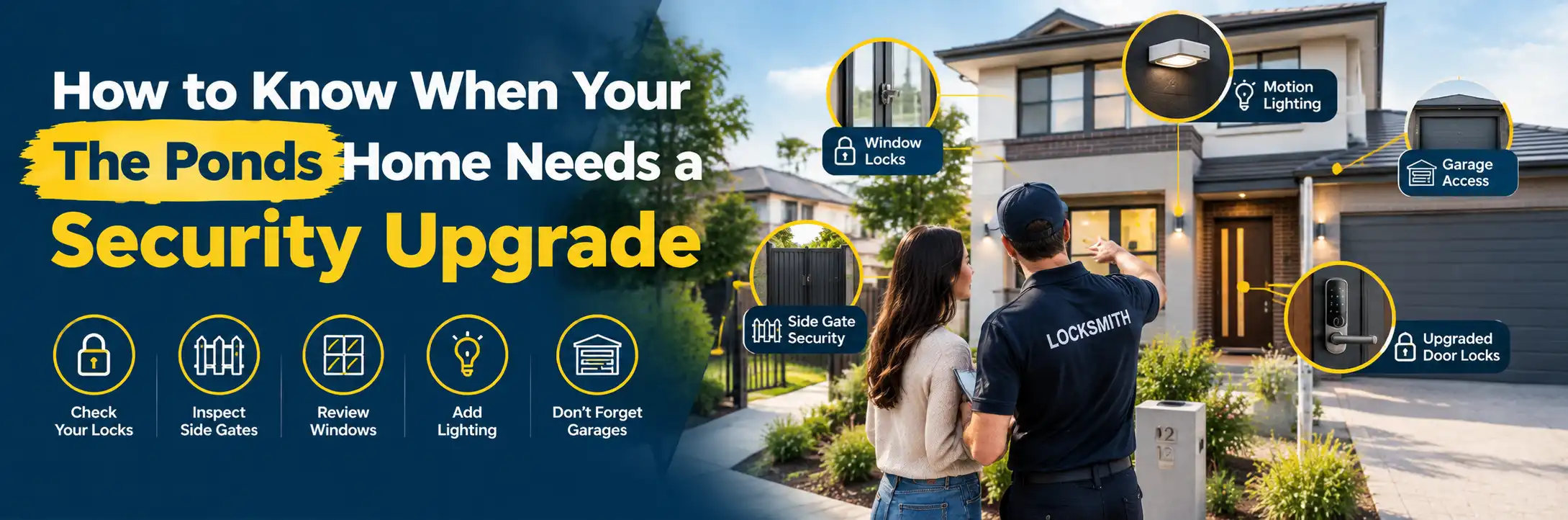
A brand new home in The Ponds feels secure simply because everything is new. Fresh paint, unworn hardware, and doors that haven’t seen years of use all create a sense that security has already been taken care of by the builder.
That feeling is worth questioning, because “new” and “secure” aren’t actually the same thing.
What to Look For First for Security Upgrades
Your home likely needs a security upgrade if the locks are still builder-standard, if there are gaps around shared fencing or side access, or if you genuinely can’t say what would happen if someone tried the front door properly. Signs you need to upgrade home security aren’t usually dramatic — they’re the small gaps that get overlooked simply because a home is new and everything still looks freshly finished.
The good news is that spotting these gaps takes very little time, and addressing them is usually far simpler than most homeowners expect.
Outdated Hardware Left Over From the Builder
The first place to look is the hardware itself, since this is where most new homes fall short without anyone realising.
Standard Builder Locks vs What You Actually Need
Builders fit locks that meet the minimum Australian Standard, which is a compliance benchmark rather than a genuine security recommendation. These standard locks work, but they’re rarely the strongest option available.
Outdated Locks Warning Signs to Watch For
Outdated locks warning signs include a key that needs jiggling, a lock that feels loose in its housing, or simply not knowing how old the hardware actually is. Any one of these on their own is worth a closer look.
Gaps Specific to New Estate Living
Beyond the hardware itself, newer estates like The Ponds come with a few structural quirks worth checking.
Shared Fencing and Side Access Points
Many homes across The Ponds share side fencing or access paths with neighbouring properties, which changes how exposed certain entry points are compared to a standalone block. Walking your own property with this in mind often reveals a side gate that’s easier to reach than the front door.
Unlit Areas Around Newer Streets
Street lighting and established landscaping take time to catch up with a growing estate, which can leave certain areas around newer homes genuinely darker than they’ll eventually be. Motion-sensor lighting is a simple, affordable way to close this gap in the meantime.
Knowing If Your Home Is Actually Secure
A little honest self-assessment goes a long way here.
A Simple Walk-Around Test
How to know if your home is secure often comes down to a simple test: walk the full perimeter and ask whether each entry point would genuinely slow someone down, or whether it would barely register as an obstacle at all.
When to Replace Door Locks
When to replace door locks generally comes down to a combination of age, visible wear, and whether the lock has ever been upgraded since the builder first installed it. If you can’t answer that with any confidence, it’s a reasonable sign the upgrade is overdue.
“A home doesn’t need to feel unsafe to actually have a security gap. Most gaps are quiet ones.”
What a Security Upgrade Actually Involves
Upgrading doesn’t mean overhauling the entire property at once.
Prioritising the Highest-Risk Entry Points
Start with whichever entry point would be easiest to reach unnoticed, whether that’s a side gate, a rear sliding door, or a garage access point that doesn’t get the same attention as the front entry.
Smart Additions Worth Considering
Add one upgrade at a time — a video doorbell, motion-sensor lighting, then a higher-security lock cylinder — rather than tackling all three at once.
Building Your Own Home Security Checklist
A simple, honest checklist makes it easy to see exactly where your home stands.
- Confirm your external locks are higher than builder-standard grade
- Check side gates and shared fencing latch securely
- Add motion-sensor lighting to any dim areas around the property
- Test every window lock, including upstairs and side-facing rooms
- Review your setup again after any renovation or landscaping work
A home security checklist new homeowners can genuinely stick to is one that’s simple enough to actually finish, rather than an overwhelming list that never quite gets ticked off.
When to Bring in a Professional Opinion
If you’re not entirely sure whether something you’ve noticed is a genuine issue, it’s worth having a locksmith take a quick, professional look before deciding either way.
Reviewing Security as the Suburb Grows
The Ponds is still developing, and that means the security landscape around your home will keep shifting for some time yet. Revisiting your security setup every year or so keeps your home genuinely matched to its surroundings.
Balancing Upgrades With a New Home Budget
A genuine security upgrade doesn’t need to happen all at once. Spacing improvements out over the first year, starting with the highest-risk entry point, still gets you to a properly secure home without needing to tackle everything in a single weekend.
Involving the Whole Household in the Check
A quick walk-around is more effective when more than one person is involved, since different household members often notice different things.
Keeping Perspective Without Overreacting
It’s worth remembering that spotting a gap doesn’t mean your home is genuinely unsafe — it simply means there’s room to improve on what the builder provided as a baseline.
Conclusion
A brand new home in The Ponds isn’t automatically a secure one, and recognising that early is the first real step toward closing the gap.
Check the hardware, walk the property with fresh eyes, and address the highest-risk points first. A security upgrade doesn’t need to be a big project — it just needs to actually happen.